The Complete Parent’s Guide to Aviation Summer Camps in Maryland, Washington DC & Northern Virginia
If you are researching an aviation summer camp for your child, you are likely comparing options across Maryland, Washington DC, and Northern Virginia.
You may be asking:
Is this educational or just recreational?
Is it safe?
Is it worth the investment?
Will it help my child long term?
This guide explains what parents should know before enrolling in an aviation summer program.

STEM Camp vs Aviation Camp: Understanding the Difference
Many parents compare aviation camp to STEM camp. The difference is depth and context. Traditional STEM camps rotate through multiple science topics — robotics one day, chemistry another, coding another. Aviation camp focuses deeply on one applied discipline: flight. Aviation integrates science, technology, engineering, and math — but within a real-world operational system. Instead of building a model, students learn how a real aircraft is inspected before flight. Instead of coding a simulation, they sit inside a flight simulator preparing for an actual flight. The learning becomes applied, not abstract.
What Makes a Legitimate Aviation Summer Camp?
When evaluating aviation camps near Washington DC or Maryland, parents should look for:
1. Real Pilot Instructors
Are instructors licensed pilots with flight experience?
Aviation is procedural and safety-driven. Instruction should come from professionals who operate in that environment daily.
2. Aircraft Access
Do students work around real aircraft?
Preflight inspection is not theoretical. It is physical and procedural.
3. Simulator Training
Is a certified flight simulator used for preparation?
Training on a Redbird simulator builds confidence and familiarity before entering a real cockpit.
4. Structured Curriculum
Is the week designed around progression?
A legitimate program builds toward something — not random daily activities.
What Happens During a Real Aviation Camp Week?
A properly structured aviation summer camp should build progressively toward a culminating flight experience.
At a serious aviation program, students may:
Learn checklist discipline and cockpit procedures
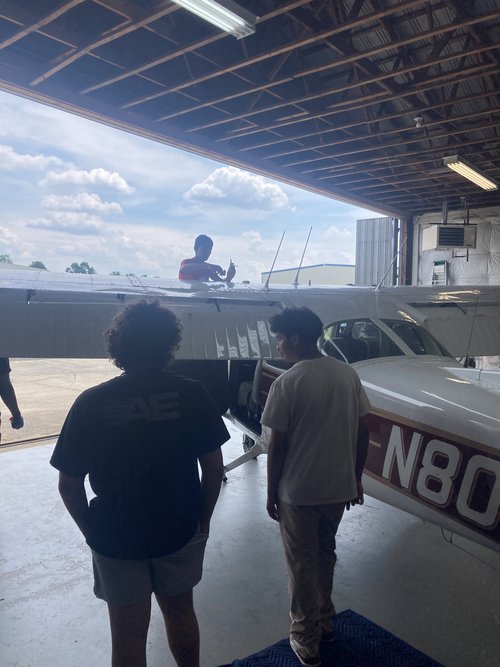
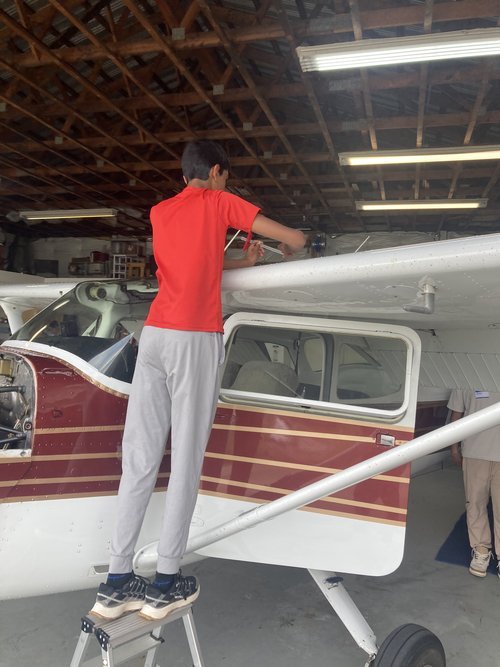
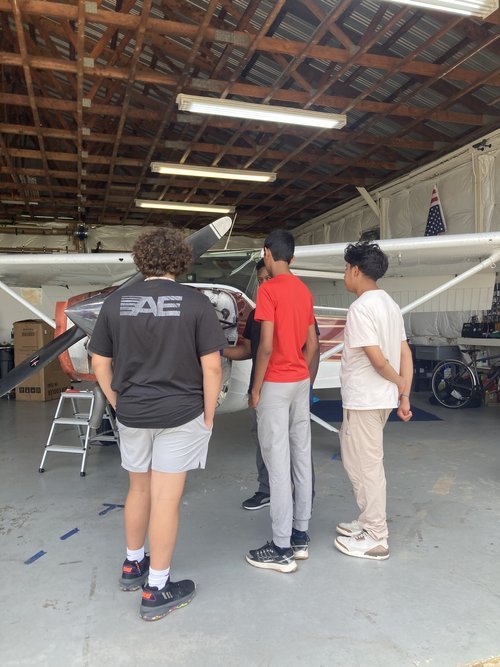
Practice full aircraft walk-arounds
Understand safety protocols
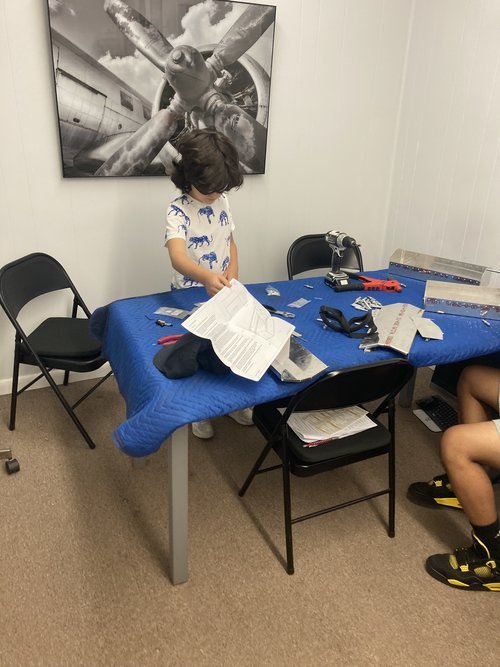
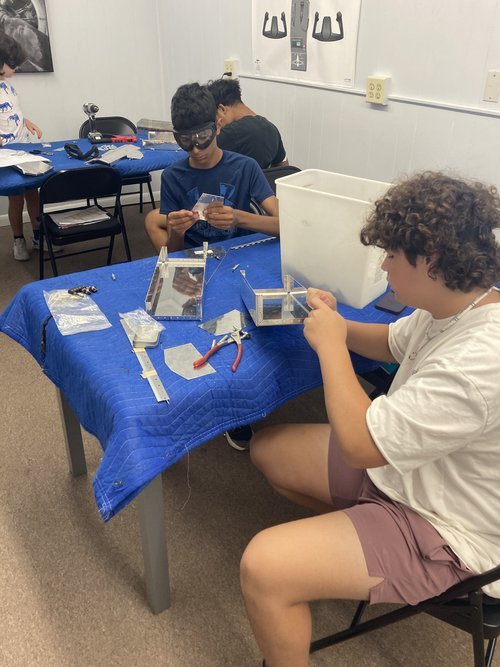
Participate in hands-on aircraft construction concepts such as riveting
Train on a Redbird flight simulator
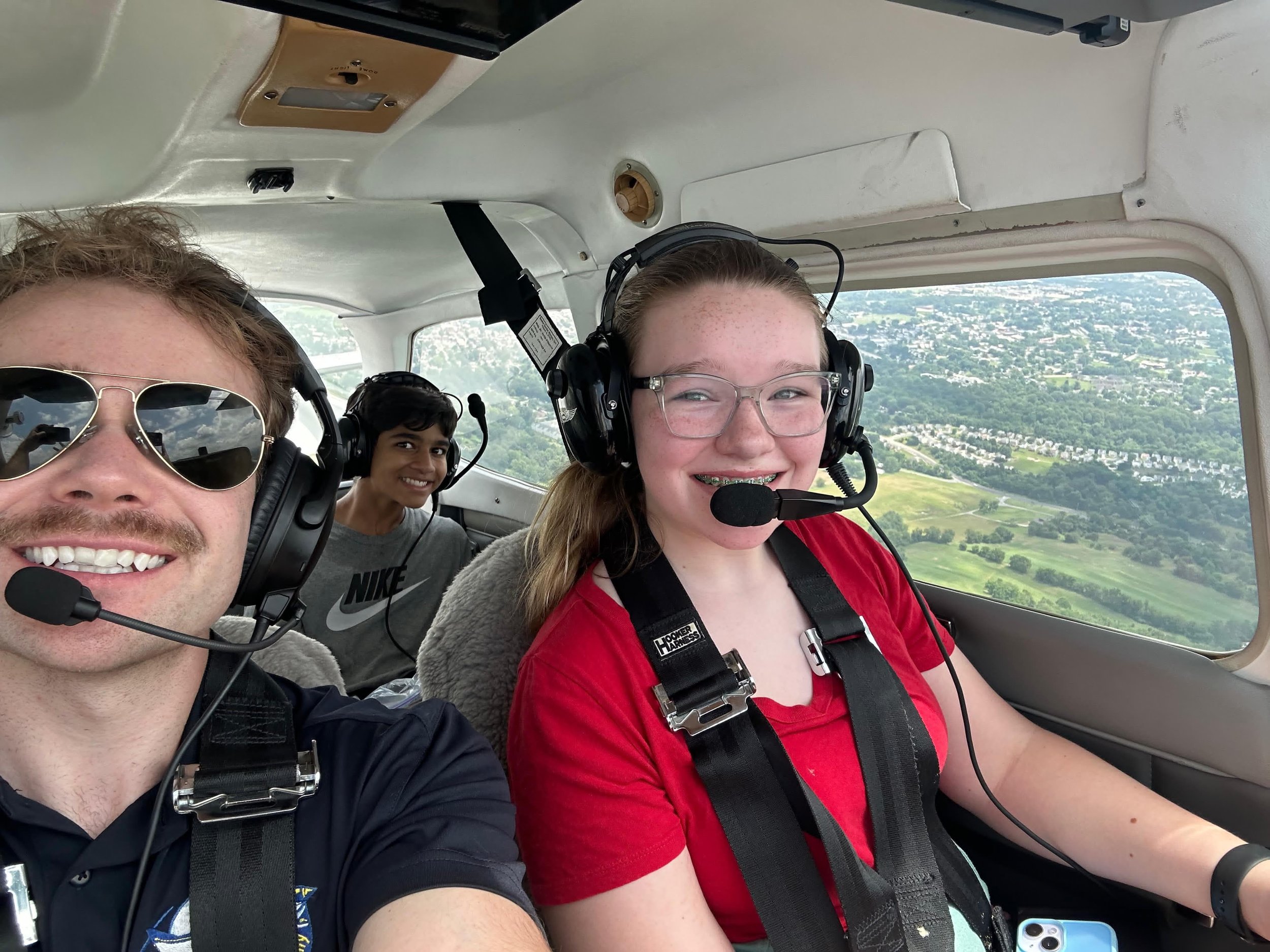
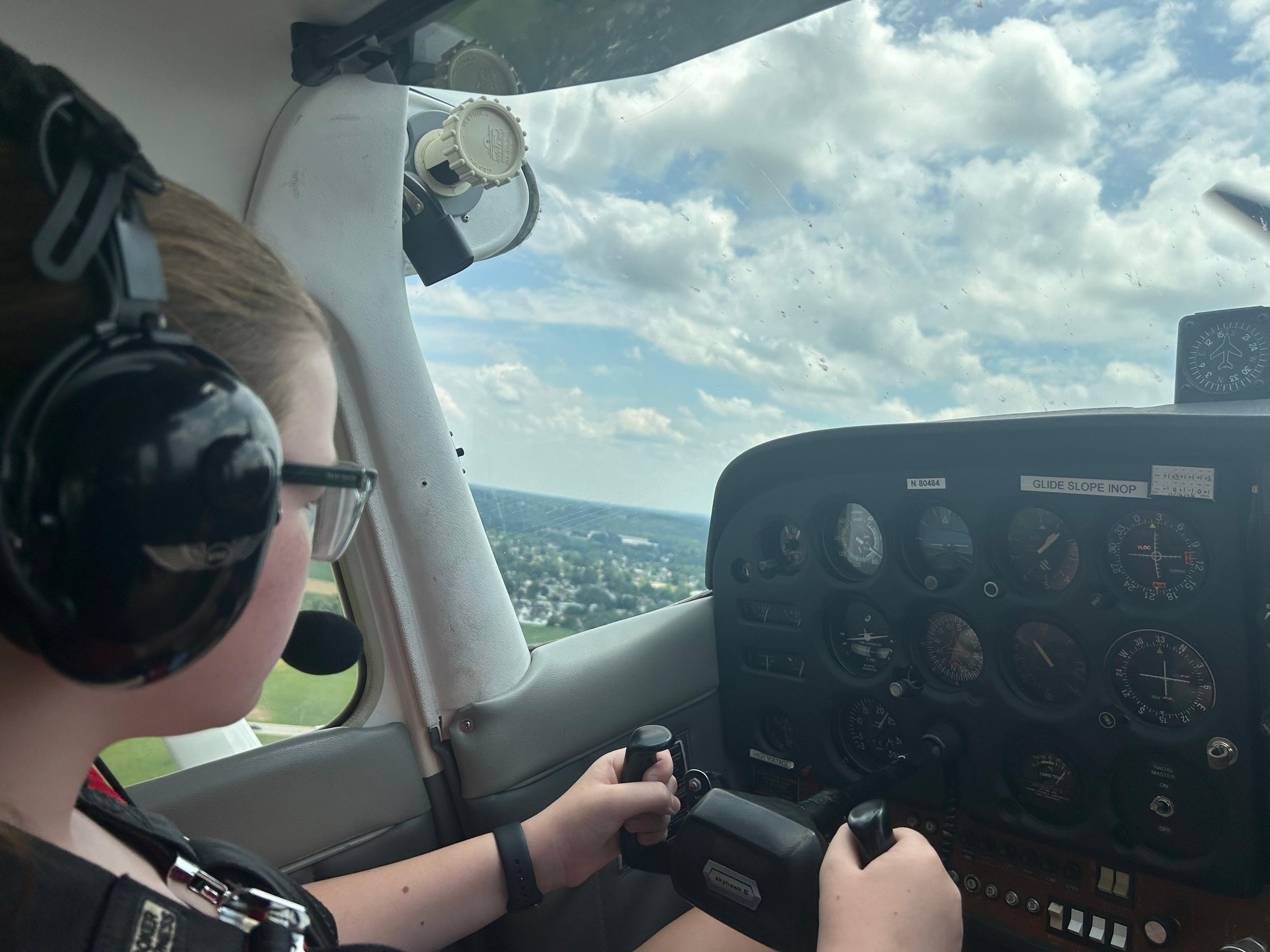
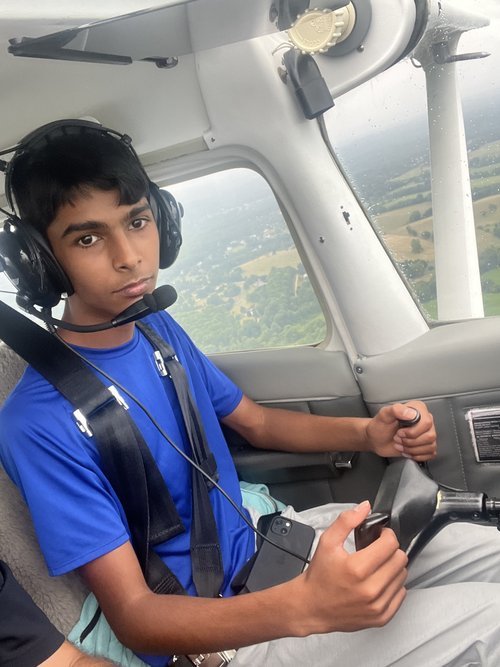
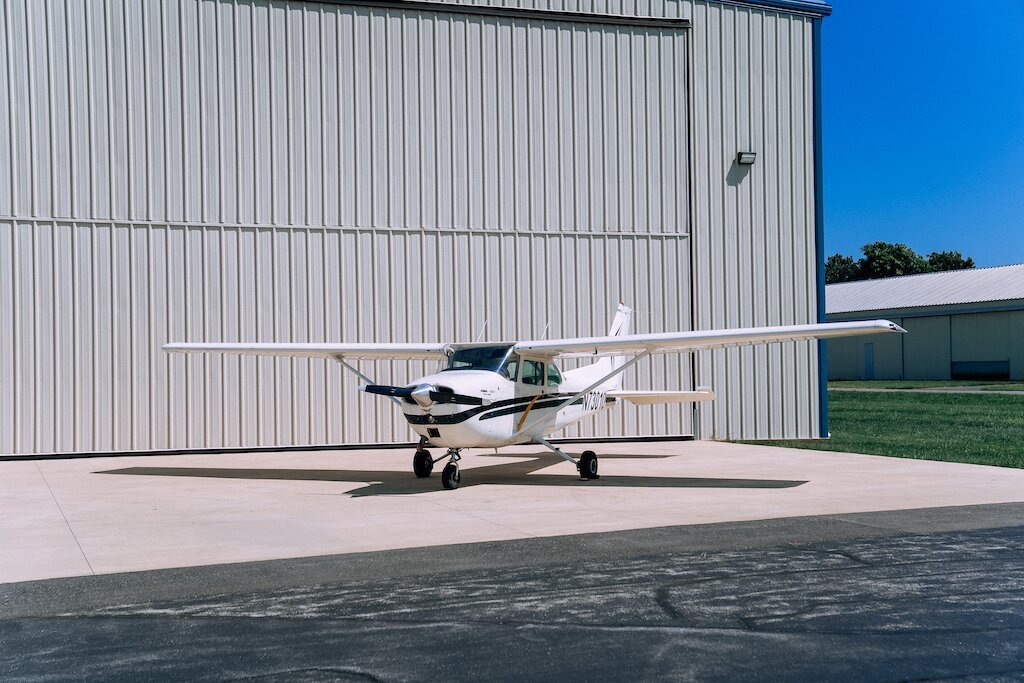
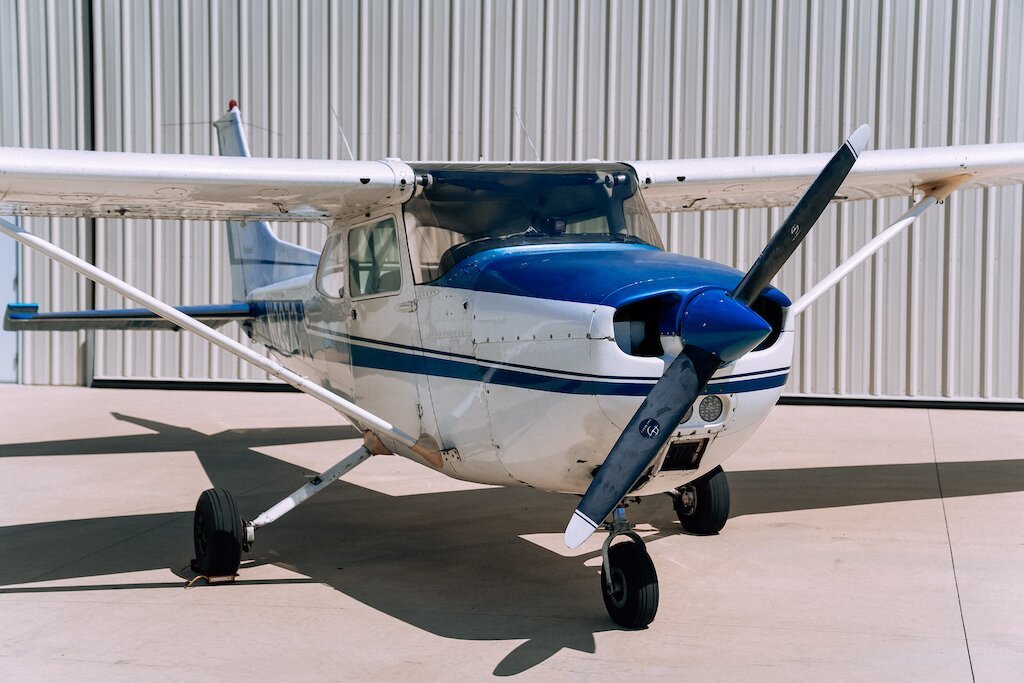
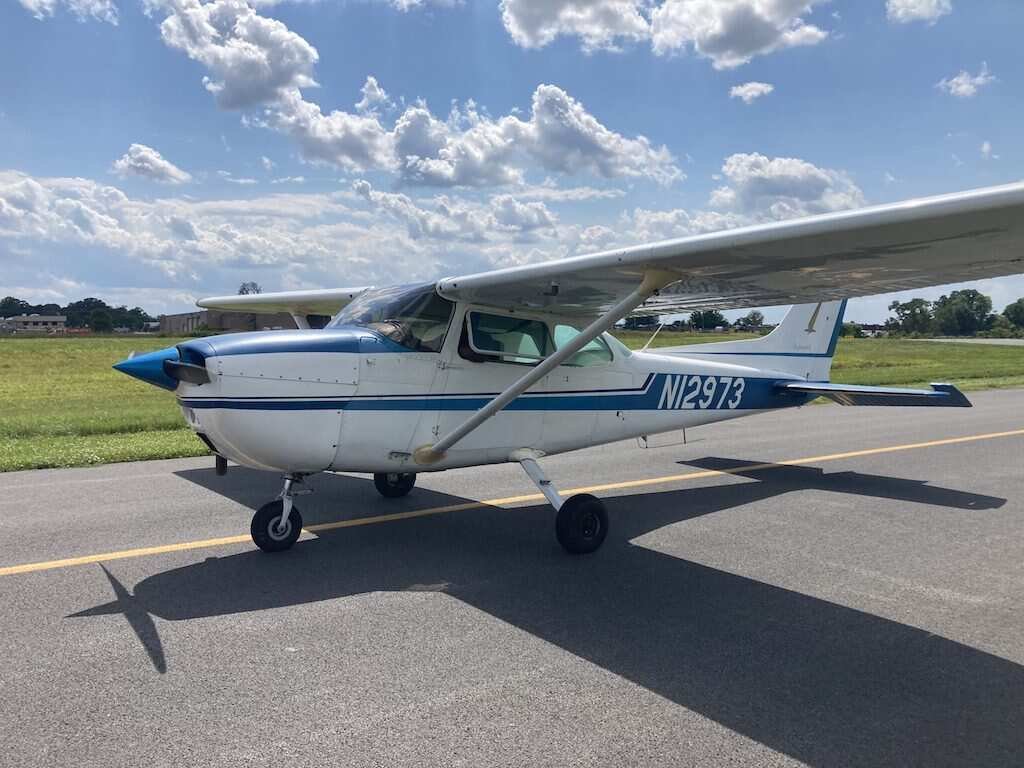
Prepare for a supervised flight in a Cessna 172
The week should not feel random. It should feel like preparation.
Hands-On Aircraft Experience
Exposure to real aircraft changes everything.
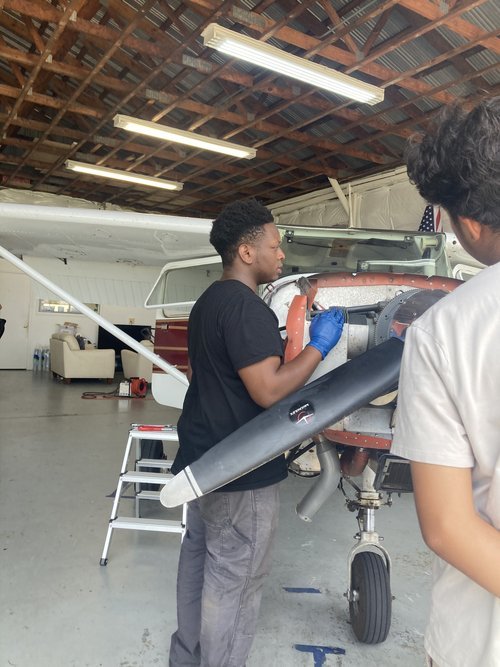
Students working around real airplanes in a maintenance and training environment learn:
How aircraft are inspected
How structural components are assembled
Why precision matters
How safety standards are enforced
Participating in a hands-on riveting project introduces engineering fundamentals and aircraft construction principles in a tangible way. This moves learning from theoretical to applied.
Why Simulator Training Matters
The Redbird flight simulator is not entertainment. It is a structured training tool used in real pilot development. Students learn:
Basic flight control coordination
Climbs, descents, and turns
Instrument awareness
Checklist management
Situational awareness
By the time they reach their final-day flight, they are not overwhelmed. They understand the sequence.
The Final Day Flight — Why Preparation Matters
The culmination of a structured aviation week is a supervised flight in a Cessna 172. This is not a random experience flight. Students prepare all week by:
Learning procedures
Practicing checklists
Understanding aircraft systems
Training on a simulator
The flight becomes the application of knowledge — not just a ride.
Safety Standards
Serious aviation programs operate within regulated flight academy environments. Students are supervised continuously. Procedures are followed exactly. Small group sizes are maintained to preserve safety and instructional quality.
Parents should ask:
Is the environment structured?
Are instructors credentialed?
Is there a safety-first culture?
If the answer is unclear, that is a concern.
Is Aviation Summer Camp Worth It?
For students genuinely interested in aviation, aerospace, engineering, or piloting, early immersion provides:
Clarity
Confidence
Academic direction
Understanding of real pilot training
Exposure to professional standards
For undecided students, it provides meaningful exposure to a highly structured technical field. It is not passive entertainment. It is guided discovery.
Who Is This Program For?
Ideal students:
Are curious about aviation
Enjoy technical learning
Want hands-on experience
Are exploring future pilot pathways
Are motivated and ready for structured instruction
This is not designed as daycare with airplanes. It is structured aviation exposure.
Serving Maryland, Washington DC & Northern Virginia
Montgomery County Airpark in Gaithersburg serves families from:
Washington DC
Northern Virginia
Bethesda
Rockville
Potomac
Arlington
Fairfax
Families across the DMV choose structured aviation immersion over generic STEM programming.
Final Guidance for Parents
When choosing an aviation summer camp in Maryland or near Washington DC, ask:
Is this real aviation or themed activity?
Are instructors real pilots?
Is there aircraft access?
Is there simulator training?
Is the week structured toward a meaningful outcome?
The difference between a themed camp and a structured aviation program is significant. One entertains curiosity. The other develops it.
THE COMPLETE PARENT GUIDE
Aviation Summer Camp in Maryland
Serving Washington DC & Northern Virginia Families
If you are researching an aviation summer camp in Maryland, Washington DC, or Northern Virginia, you are likely looking for more than a recreational program.
You want something structured. Educational. Safe. Legitimate.
This guide explains what aviation summer camp should include, what separates serious programs from themed activities, and how to evaluate whether a program is worth your child’s time.
What Is an Aviation Summer Camp — Really?
A true aviation summer camp is not a crafts program with airplane decorations.
It is structured exposure to real aviation principles inside an operational airport or flight training environment.
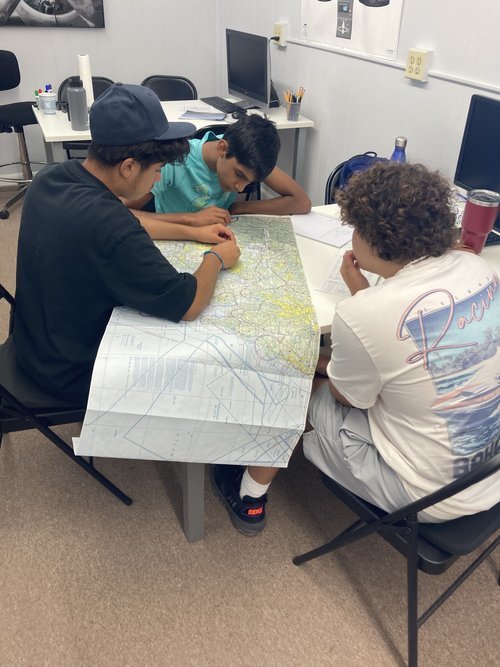
Students should be introduced to:
Aircraft systems
Preflight inspection procedures
Checklist discipline
Airspace awareness
Basic aerodynamics
Pilot decision-making
Flight simulation
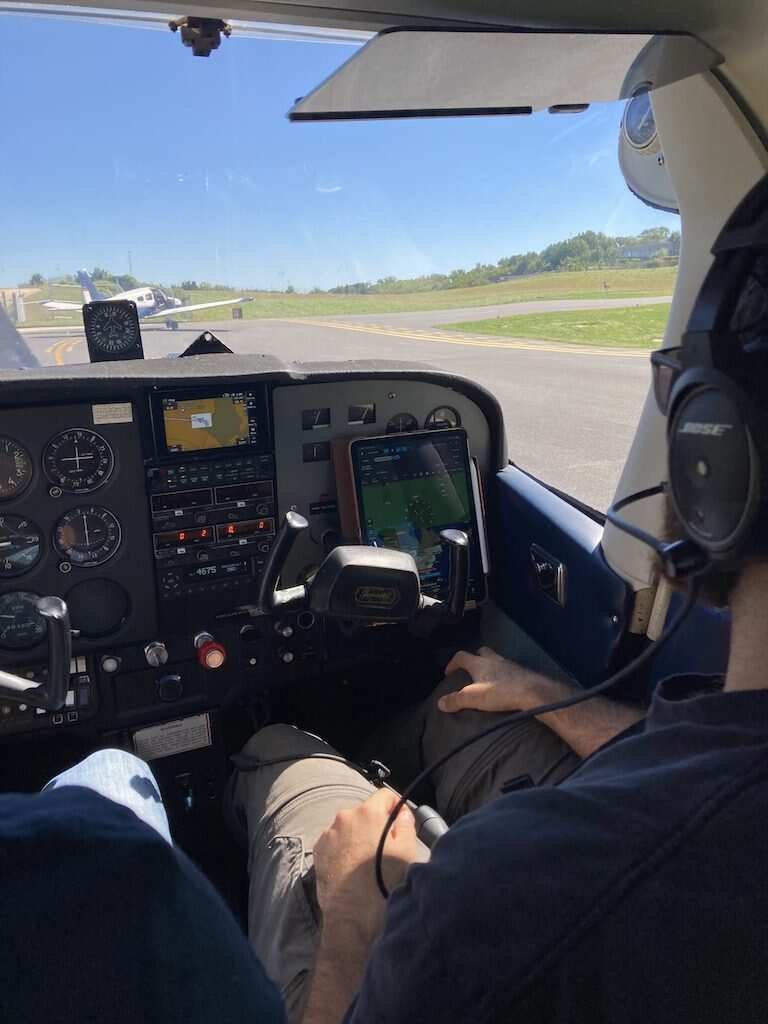
Real cockpit structure
The key distinction is realism.
If students are not exposed to real procedures and real aircraft, it is not true aviation immersion.